what researchers tested
a randomized crossover trial in 23 young adult men with moderate habitual caffeine intake compared placebo with 100 mg and 400 mg caffeine taken 12, 8, or 4 hours before bed. researchers assessed sleep with in-home monitoring and diaries.
the 400 mg dose affected sleep, with effects varying by timing and outcome. the 100 mg conditions did not show statistically significant sleep effects versus placebo in this sample. no statistically significant effect is not proof of no effect for every person.
why one cutoff does not tell the whole story
a separate 2013 trial tested 400 mg at bedtime and 3 or 6 hours before bed. sleep disruption occurred at all three timings compared with placebo. that study examined a substantial single dose; it cannot tell us exactly what happens after a much smaller amount.
the practical question is more specific than “can i have caffeine after lunch?” it includes how much, when you plan to sleep, and what else you have already consumed.
what this means for your routine
keep dose and time together in your notes. a list of daily totals without timestamps misses part of the picture; a fixed cutoff without amounts misses another part.
do not read the 100 mg finding as permission to take caffeine close to bed. the newer trial was small and limited to men, and it did not study every pattern of intake or every kind of sleeper.
what we can say about workflow
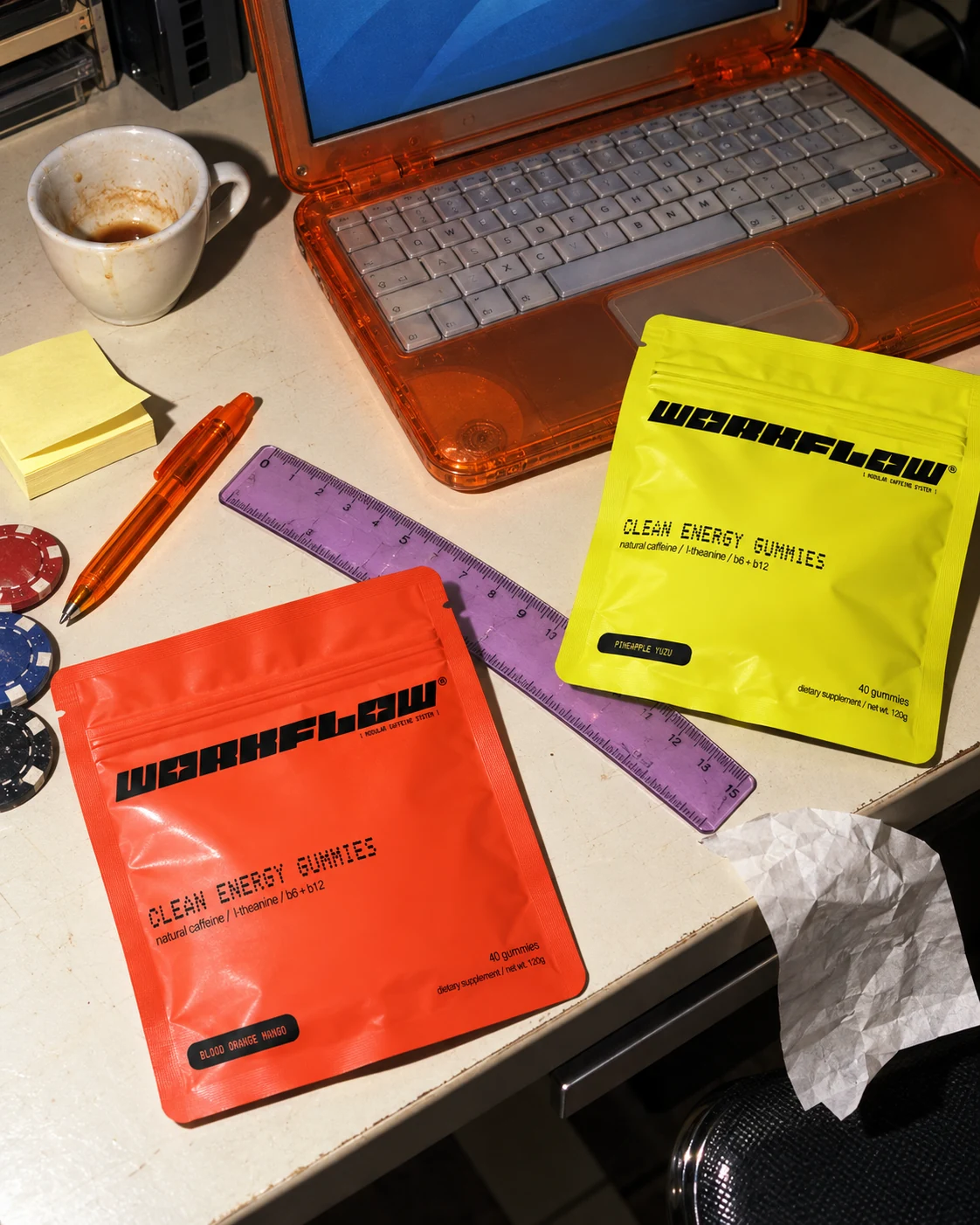
a workflow gummy contains 20 mg caffeine. its countable format lets you include it in a dose-and-time record alongside drinks and other caffeine sources.
if the goal is to avoid further caffeine before bed, choose a caffeine-free option. changing the source or adding l-theanine does not remove caffeine from the total.
[ TAKE IT WITH YOU ]
look at the dose and the clock
[ GOOD QUESTIONS ]
a little more clarity
is there one caffeine cutoff that works for everyone?
the studies here do not establish one. the amount, the timing and the person matter. a smaller dose is not a guarantee of undisturbed sleep.
does adding l-theanine make late caffeine sleep-safe?
these studies do not establish that. a caffeine + l-theanine product still contributes caffeine to your day.
sources & further reading
the linked studies examine these ingredients at the amounts shown. workflow’s per-gummy formula is listed separately.
written by workflow. follow the product label. send a question or correction.